Tuesday, 4 October 2011

BOOKS: A 'Toxic Genre', by Martin Barker


The term in quotes in the title of Martin Barker's valuable study of Hollywood's reaction – or, actually, its failure to react – to America's misadventures in the Middle East, comes from a 2008 article in the film industry "bible", Variety. Ironically, the writer was pessimistic about the box office chances for Kathryn Bigelow's The Hurt Locker, a movie which went on to take $12.5 million – the only one of 23 war movies to earn more than it cost to make – and take six awards at the 2010 Oscars.
Barker draws an interesting parallel – or contrast – between Bigelow's film and the 3D blockbuster by her ex-husband, James Cameron, Avatar. He was not the first to do so. He quotes an Iraqi journalist who described Avatar as "the most accurate Iraq war movie so far" and so did the neo-Marxist pop philosopher, Slavoj Zizek, who claimed, wrongly, that The Hurt Locker was basically a fantasy since it never showed GIs killing people.
This raises the whole question of what, after all, is a war movie, what is "real", and -- in similar vein to Aaron Kerner's recent study of films and the Holocaust – the very nature of documentary itself.
Does the fact that what appeared to be genuine video footage in Redacted, hand-held wobbling, out-of-focus blurring etc, was actually created in the studio mean the message of the movie was invalid?
(If the footage of Apollo 11 leaving the moon could not have been genuine, does that mean that the landing never took place? Much of the footage of Night Mail, the archetypal documentary, was actually shot in a specially constructed mock-up, and the actuality dialogue was spoken by the posties from a pre-defined script; Barker does not mention this, though it would have strengthened his argument about the blurring of the borders between illusion and reality. All art is, after all, a lie that tells the truth.)
Rightly, Barker is dismissive of vulgar "leftists" whose judgement of good or bad of any film in this genre is based on whether they agree or disagree with its "message". A work which massages the preconceptions and prejudices of its audience rather than following Bob Dylan's dictum, "I can't think for you, you'll have to decide", can have the opposite effect to that intended.
The example of John Wayne's The Green Berets, which became a pejorative byword for sabre-rattling agitprop, has lessons for the left as well as the right. As we found with the protest songs chart success, which effectively steered the ant-war movement into safer, less confrontational directions, the left can suffer from a similar backlash.
He publishes detailed synopses of many of the films in the war movies genre, which will be valuable tools for any film students who want to delve into the issues he raises.
The book might have profited from a wider focus. For instance, his basic thesis might have been strengthened by reference to non-Iraq movies like Paths of Glory and All Quiet on the Western Front, and also Clint Eastwood's re-examining of the battle for Iwo Jima.
In the end, of course, the remarkable thing is not Hollywood's failure to grapple with the war, but the fact that what is actually a billion dollar industry, part of the same military-industrial complex which uses war as part of its survival strategy, should allow movies like Redacted to be made. 
A shorter version of this review was published in the Morning Star.

BOOKS; A Toxic Genre, by Martin Barker


A 'Toxic Genre' – the Iraq War Films, by Martin Barker (Pluto, £17 )

The term in quotes in the title of Martin Barker's valuable study of Hollywood's reaction – or, actually, its failure to react – to America's misadventures in the Middle East, comes from a 2008 article in the film industry "bible", Variety. Ironically, the writer was pessimistic about the box office chances for Kathryn Bigelow's The Hurt Locker, a movie which went on to take $12.5 million – the only one of 23 war movies to earn more than it cost to make – and take six awards at the 2010 Oscars.
Barker draws an interesting parallel – or contrast – between Bigelow's film and the 3D blockbuster by her ex-husband, James Cameron, Avatar. He was not the first to do so. He quotes an Iraqi journalist who described Avatar as "the most accurate Iraq war movie so far" and so did the neo-Marxist pop philosopher, Slavoj Zizek, who claimed, wrongly, that The Hurt Locker was basically a fantasy since it never showed GIs killing people.
This raises the whole question of what, after all, is a war movie, what is "real", and -- in similar vein to Aaron Kerner's recent study of films and the Holocaust – the very nature of documentary itself.
Does the fact that what appeared to be genuine video footage in Redacted, hand-held wobbling, out-of-focus blurring etc, was actually created in the studio mean the message of the movie was invalid?
(If the footage of Apollo 11 leaving the moon could not have been genuine, does that mean that the landing never took place? Much of the footage of Night Mail, the archetypal documentary, was actually shot in a specially constructed mock-up, and the actuality dialogue was spoken by the posties from a pre-defined script; Barker does not mention this, though it would have strengthened his argument about the blurring of the borders between illusion and reality. All art is, after all, a lie that tells the truth.)
Rightly, Barker is dismissive of vulgar "leftists" whose judgement of good or bad of any film in this genre is based on whether they agree or disagree with its "message". A work which massages the preconceptions and prejudices of its audience rather than following Bob Dylan's dictum, "I can't think for you, you'll have to decide", can have the opposite effect to that intended.
The example of John Wayne's The Green Berets, which became a pejorative byword for sabre-rattling agitprop, has lessons for the left as well as the right. As we found with the protest songs chart success, which effectively steered the ant-war movement into safer, less confrontational directions, the left can suffer from a similar backlash.
He publishes detailed synopses of many of the films in the war movies genre, which will be valuable tools for any film students who want to delve into the issues he raises.
The book might have profited from a wider focus. For instance, his basic thesis might have been strengthened by reference to non-Iraq movies like Paths of Glory and All Quiet on the Western Front, and also Clint Eastwood's re-examining of the battle for Iwo Jima.
In the end, of course, the remarkable thing is not Hollywood's failure to grapple with the war, but the fact that what is actually a billion dollar industry, part of the same military-industrial complex which uses war as part of its survival strategy, should allow movies like Redacted to be made. 
A shorter version of this review was published in the Morning Star.

Bert Jansch - our thoughts are with you

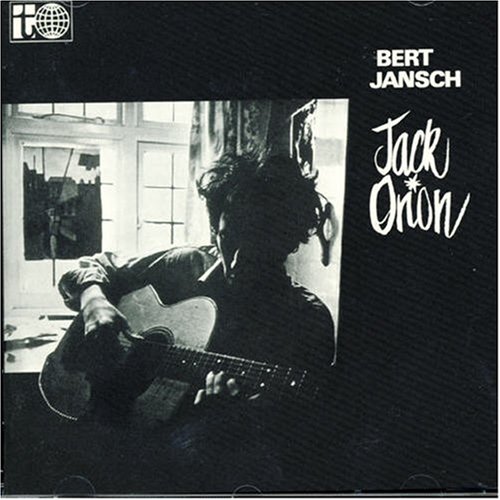
Having recovered sufficiently from cancer to be able to tour USA with Neil Young last year, Bert Jansch is now seriously ill again.We, who have loved his music over the years since his eponymous album hit our turntables back in 1965, but for me the really seminal moment was his still stupendous Jack Orion album the following year.
That was in the days when "folk rock" meant record producers adding electric backing to Paul Simon songs; Fairport's Liege and Lief was no more than a gleam in Dave Swarbrick's ear. I was advising Sandy Denny she'd be better singing jazz.
And his version of Blackwaterside nearly landed me in court.

It happened like this:

In 1969 I received a surprising call from Nathan Joseph, boss of Bert's record company, Transatlantic. He wanted to know if I was willing to appear as an “expert witness” in a legal action he was planning to take against Peter Grant, the notoriously thuggish manager of the Led Zeppelin rock group, for breach of copyright.

He maintained that Black Mountainside, an acoustic guitar feature from Jimmy Page on Zeppelin’s first album, was a note-for-note copy of Black Waterside, recorded by Bert Jansch, on his third album, Jack Orion. I’d reviewed the album enthusiastically for Melody Maker, applauding its blend of contemporary guitar accompaniments and traditional lyric:
“At first sight the idea is horrifying, a bluesy guitarist who has hitherto concentrated upon contemporary subjects singing the big old ballads of the true traditionalist. In fact, Jansch’s interpretations illuminate the songs from a completely new angle. As sung by him, the brutal world that created the old ballads doesn’t seem so very far off from the world of The Needle of Death.”
(The latter being the title of Jansch’s lugubrious commentary on the perils of heroin addiction, inspired by the death of a friend.)
But I had also written at length on the objectionable practice of attempting to copyright folk songs, which Black Waterside was, undoubtedly. In my view, they should all be considered in the public domain. The entire area of folksong copyright was a veritable can of worms. There had been notorious instances of this, few of which had actually come into the courts with any measure of success: the way Chas McDevitt had turned Freight Train, which he had learned from Peggy Seeger, who had heard it from her nurse, Libba Cotten, when a child, into a monster hit, retaining all the royalties without a penny going to either Ms Seeger or Ms Cotten (or not until M’Learned Friends became involved); the way Paul Simon had borrowed Martin Carthy’s ostinato guitar riff for Scarborough Fair, and turned it into another money-maker, especially when Parsley, Sage, Rosemary and Thyme (as he called it) was used on the soundtrack of Mike Nichols’ 1967 movie, The Graduate; the way, when Ewan MacColl refused to copyright his mother’s version of Lord Randall when he recorded it, it was then recorded by the Spinners folk group, who finding it unprotected, promptly copyrighted it themselves, so not only did they get the royalties from their own version, but also grabbed any monies from Ewan’s own recording of his mother’s song.
I had tried to persuade Norman Buchan, MP, when he was responsible for cultural matters in the Labour Government, to investigate the possibility of new legislation which would pay all royalties from traditional music into a central fund, to be shared between the efforts of folksong collectors – mostly engaged in a thankless and often far from cost-effective labour of love – and their informants. Buchan had been a pioneer of the Scottish folk revival when he was a humble teacher at the Rutherglen Academy, and he knew more about folk music than most politicians.
As it stood, copyright was a creation of the age of print, and it took no cognisance of oral folk culture. So if a singer sang a song that had been in the family for generations to a collector who wrote it down, then the act of scribbling it into a notebook created the copyright – not for the informant, but for the collector. If, using more modern technology than the notebook which had been Cecil Sharp’s preferred method, the collector used a sound recorder, then the copyright in that recording but not in the song would belong to that collector, not the singer nor the singer’s family. If someone else played the recording, and transcribed it on to paper, then that act conferred copyright on that third party, clearly a nonsense.
Sharp himself gave his view in 1907:
“The law protects the product of the man's brain, not the thing on which he exercises his wits. . . . A collector who takes down a song from a folk-singer has an exclusive right to his copy of that song . . . It is always open to someone else to go . . . to the same source, exercise the same skill and so obtain a right to his copy.”
Buchan organised some meetings at the House of Commons to work out a procedure that would be acceptable to all interested parties, but it foundered upon the opposition of Novello & Co, the music publishers (now part of EMI Music and, incidentally, publishers of my own songwriting efforts), who were unwilling to part with their own copyrights, which had been attached to the over four thousand songs Cecil Sharp had collected in England and America. Then Buchan died, a sad loss to music and left-wing politics, and the efforts to introduce some rationality into the business petered out.
So who owned Black Waterside? The version sung by Bert Jansch and, before him, by Annie Briggs, had been taught her by Albert Lancaster Lloyd, genial eminence rouge behind the folk revival in Britain. Lloyd had presumably learnt it from the recordings Peter Kennedy and Sean O’Boyle had made of Paddy and Mary Doran, two Irish tinkers, in 1952 (the man and his wife sang completely different melodies to essentially the same set of words). But Kennedy was an employee of the English Folk Dance & Song Society at that time, on secondment to the BBC. Did the recordings he made belong to him, the BBC, or the EFDSS? No doubt all three would maintain their rights. In the recordings, that is, not of the song’s text and melody. Kennedy published words and music of a version he and O’Boyle recorded from Winnie Ryan of Belfast, in his Folksongs of Britain & Ireland (Cassell, 1975), the title page of which carries the legend: “Text ©  copyright Peter Kennedy, 1975, Music © copyright Folktracks and Soundpost Publications.” But since it says, also, “Musical transcriptions and guitar chords by Raymond Parry”, then surely the music is Mr Parry’s copyright.
Also, the BBC recorded the Dorans at the Puck Fair in Killorglin, Co. Kerry, five years earlier. So perhaps that earlier recording established the BBC’s rights, prior to Peter Kennedy’s.
Cecil Sharp noted a version from a Mrs Overd in Hambridge, Somerset, in 1904. Versions were printed by Frank Kidson in 1891 and 1927, and others have appeared in print dating back to 1787. Sharp collected three versions in Virginia and North Carolina, USA, in 1917, and the song has also appeared in Baltimore and Canada.
The idea that collectors make fortunes out of their work dies hard. Sharp recorded an exchange as he noted down a song from a woman engaged in her weekly wash: “In one of the intervals between the songs one of the women remarked, ‘You be going to make a deal o’ money out o’ this, sir?’ My embarrassment was relieved by the singer at the wash-tub, who came to my assistance and said ‘Oh! it’s only ’is ’obby.’ ‘Ah! well,’ commented the first speaker, ‘we do all ’ave our vailin’s.’”
George “Pop” Maynard, who besides being a superb traditional singer was also marbles champion of the world until his dying day, once asked me the same question about Peter Kennedy. He looked sceptical when I assured him there was no money to be made from collecting. I might have added that money might be made by ripping off the work of collectors and copyrighting it in your own name.
All this neglects the essential point about folk music, that, rather like a jazz soloist, each “performance” (if one may apply such a description to a situation where singer and audience are a community sharing an experience as foreign to the concert stage as a producer co-operative is to a capitalist megacorp) is unique.
Sharp observed of Henry Larcombe, a blind singer from Haselebury-Plucknett, from whom he got an 11-verse version of Robin Hood and the Tanner, which was identical to a black-letter broadside in the Bodleian Library and therefore he argued must have been “preserved solely by oral tradition for upwards of two hundred years” that
“He will habitually vary every phrase of his tune in the course of a ballad. I remember that in the first song that he sang to me he varied the first phrase of the second verse. I asked him to repeat the verse that I might note the variation. He at once gave me a third form of the same phrase. I soon learned that it was best not to interrupt him, but to keep him singing the same song over and over again, in some cases for nearly an hour at a time-the patience of these old singers is inexhaustible.”
Of Mrs Overd (from whom, it will be remembered, Sharp got a version of Black Waterside), Sharp noted that in one song, “the final phrase appeared in four different forms. These variations were not, however, attached to particular verses, though Mrs Overd never sang the ballad to me without introducing all four of them.”
One may pin down one such performance on to the printed page (which Percy Grainger tried to do, often to ludicrous effect), but even if the variations in melody and tempo between different verses are transcribed as faithfully as print will allow, they are as removed from their origins as a butterfly in a museum cabinet is from the real, fluttering beauty of the living organism.
As Margaret Laidlaw, James Hogg’s mother, told Sir Walter Scott when he printed some of her family ballads:
“There was never ane o’ my sangs prented till ye prentit them yoursel’ and ye hae spoilt them awthegither. They were made for singing an’ no for reading, but ye hae broken the charm now, and they’ll never be sung mair.” (James Hogg, Domestic Manners of Sir Walter Scott, 1834)
Grainger pioneered the use of a phonograph recording machine precisely to allow more accurately to notate the variations between verses, but this still froze a single performance, like a fly caught in aspic, with no appreciation of the wide variations possible from the same singer. Grainger’s manuscript notes of Joseph Taylor’s Creeping Jane, with its tempo swinging between 4:4 and 12:8 time signatures, is markedly different from the way Taylor sang the same song for the HMV gramophone company in 1908.
We are dealing here with an oral culture rather than a literary one, and this was as true of Bert Jansch’s unique accompaniment to Black Waterside as of the words and music. According to journalist Colin Harper, Zeppelin’s Jimmy Page had learned the tune from Al Stewart, who had assumed (wrongly, as it turned out), that Jansch had used the same DADGAD tuning pioneered by Davey Graham for his recording of She Moves Through the Fair, a composed song from the pen of Padraic Colum, which the entire folk world had learned from the singing of Margaret Barry, a banjo-playing Irish tinker street musician who made her home in London’s Camden Town during the Fifties. Maggie had learned it from a 78rpm shellac recording by “Count” John McCormack. So much for the “folk process”.
Back to Bert Jansch and Black Waterside. His tuning was actually DADGBE, ie normal guitar tuning with the bottom E dropped to D. So however like his version Jimmy Page sounded to the untutored ear of the audiences for both, it was actually quite different.
This was the situation confronted by John Mummery, QC, an eminent barrister specialising in copyright, when he was briefed by Transatlantic’s Nathan Joseph. Colin Harper quotes Joseph:
“What Mr Mummery advised was that whereas there was a distinct possibility that Bert might win an action against Page, there was also the possibility that all sorts of other people might then say, ‘Ah, but Bert heard it from me.’ Given the enormous costs involved in pursuing an action, and the thought that one could be litigating, or being litigated against, for the next twenty years on the basis that everybody and his dog would claim Blackwater Side or Mountain Side or any other kind of side, we left it at that. As the ‘writer’, Bert would have had to share the costs with us fifty/fifty - and they were not the sort of costs that we could afford, let alone Bert. But in many ways it was a very interesting case. If you think about it, almost any “traditional” song that somebody does an arrangement of, somebody will have done something vaguely similar before. The difficulty appears to be one of really establishing, amongst hundreds of arrangers, who it was that made the arrangement ‘original’.” Colin Harper: Dazzling Stranger – Bert Jansch and the British Folk and Blues Revival (Bloomsbury, London, 2000, p. 5)
And so I was not called as an expert witness after all. But the bizarre sequence of circumstances that led from an Irish tinker’s camp in 1952 to a possible legal precedent of great significance in what had now become a multi-million-dollar popular music industry, in which the songs of unlettered folk become the subject of high-powered legal briefs, is a story that begins, not in 1952, but half a century earlier, when the Royal Family’s music teacher saw something remarkable when peering out of a vicarage window.
That's a story I'm working on right now, but meanwhile all those of us who pray should be praying for Bert now, for another recovery from this destructive illness.
Meanwhile, whether you pray or not, you can post messages of appreciation here and I will pass them appropriately.
Get well soon Bert. We need you today, more than ever.

Monday, 3 October 2011

Roger Waters: The Pro's and Cons of Hitch Hiking

Continuing the process of digitising my Pink Floyd archive for the forthcoming Rockopedia extract, here's an article I wrote for Kerrang in 1984 (Note: If anyone can give me a precise publication date, I'd appreciate it):


It's only a f**king rock'n'roll band."

On the eve of his Pros And Cons Of Hitch Hiking shows at Earls Court and Birmingham NEC, Pink Floyd founder Roger Waters talks to Karl Dallas
"Earlier this year we went skiing and I was in the shop, paying a bill, and there was a woman standing there whom I knew slightly. I was waiting for my bill and she was buying something, a tea strainer. Quite suddenly she said to me: Where was your father killed? I was very surprised and blurted out: Oh, Anzio.
"Now this is a woman of about my age so she's 40-ish. She said: My father was killed in the war. Apparently, somebody lent her a copy of The Final Cut and she had listened to the whole thing and had found it very moving. In fact it had reduced her to tears.
"She told me this, standing in the shop, with some effort I suspect, and I remember thinking: That's enough, really.
"It doesn't matter if the Americans don't buy it." – Roger Waters

The surprise of the year has got to be the announcement that Pink Floyd's Roger waters was taking his new album on the road in a superstar package that includes Eric Clapton.
After all, back in 1972, Obscured By Clouds soundtrack album hadn't Roger Waters summed up what he thought of it all:
So all aboard for the American tour/And maybe you'll make it to the top,/But mind how you go/I can tell you 'cos I know/You may find it hard to get off."
(Free Four)
By 1977, the Floyd's US popularity seemed to demand that they perform in vast stadiums, seating 80,000 to 90,000 people, though Roger had always been aware of the potential destructiveness of touring with a rock band.
He still recalls with amusement the way the 1975 tour reduced films special effects man Derek Meddings to a shadow of his former self when it took some time off from James Bond stunts to mastermind the Floyd's flashes and bangs:
"He was a sort of bouncy, fit, special effects man from the film industry at the beginning of the tour and at the end he was just broken shell of a man. He just hadn't understood how physically demanding it was to be part of a group on the road. He never did another tour. He went back into the film industry."
(Meddings worked with the Floyd again, albeit briefly, concocting the "stab in the back" dagger on the sleeve of The Final Cut.)
And then there was the notorious incident during the final gig of the '77 tour at the Olympic Stadium, Montréal, when Waters found himself spitting in the face of an over-enthusiastic fan.
The event had taken over.
According to Dave Gilmour, it was Waters who blew out the plans Floyd had for concerts last November, when the whole thing was almost ready to go. But now, Roger is going on the road again, a series of not-quite one-night stands: two nights in Stockholm … Rotterdam … two nights in Earls Court … two nights in Birmingham NEC … Dortmund… Frankfurt … Two night in Zürich … two nights in Paris … And then New York and two nights on the East Coast.
To hear him tell it, though, this one is different because he … is … now … autonomous.
Despite their image as a collective, Floyd always were Roger Waters' band, at least by the mega-sales time after the departure of Syd Barrett, when Dark Side of the Moon started logging up its Guinness book of Records status for longevity in the Billboard charts, selling 14 million copies (a figure almost equalled, or even topped when you consider it's a double album, by The Wall's 13 million).
He was, of course, first among equals, and no one could minimise the contribution of Gilmour towards the sound that put Roger's anguished songs into the charts.
Certainly Roger doesn't, but as we talk in the kitchen of his comfortable – though hardly lavish – home while he bathes his fingers in toughening surgical spirit after the first of his punishing daily rehearsals with Eric Clapton et al, it becomes clear that relationships are – how shall I put it? – rather strained at present.
And though he says he still likes the last Floyd album, the perhaps prophetically titled The Final Cut, he admits that the tensions within the band got through on to the vinyl.
"I listened to it again, very recently," he said, "because, for one thing, I'm having to listen to everything to decider which of my old songs to do in the first half of the Pros and Cons show. I really like some of it. I love all that atmospheric Southampton Dock stuff. I'm really proud of that.
"But in some of it, I can hear in my voice all the strain of the aggravation that was going on at the time. It affected the record."
Not that strain and aggravation have prevented Floyd from making great albums in the past: notably Wish You Were Here (11 million copies sold), which was recorded at a time when they were so untogether that Roger quipped afterwards it should have been called Wish WE Were Here.
The same alchemy didn't work on The Final Cut, though, he feels, because "the strains and aggravation meant that my mind wasn't on it, not fully on it. It's not easy making records, because you have to concentrate on it and sometimes it's bloody hard."
On the other hand, though the money men may wring their hands and the criticsd may gloat over the album's "failure", it needs to be remembered that The Final Cut did sell over three million copies, doing particularly well in Germany, almost as well in France and Italy, poorly in Britain – despite, or perhaps because of, its specifically British theme – and really quite badly in the States, where Maggie Thatcher and the Falklands probably didn't mean a great deal to the average street-wise teenager.
"Quite badly", to keep the thing in  perspective, equals just under a million American sales, I gather, which many a lesser mortal would be content with. But the real reason he blew out the Floyd concerts was simply because he was already deeply into the new album and the possible tour.
"We were never going to tour, anyway. We might have done one gig for a TV simulcast, but I got involved with Pros and Cons and I thought I might well do something theatrical with it. I had a feeling at the time that I would try and organise it into theatre, I mean small theatre, rather than big rock theatre, but in the end, maybe because I feel confident about doing rock theatre, and also because Eric was pushing me to go on the road, I decided to go the Earls Court/Westfallen Halle route."
Was he worried about the forthcoming tour?
"In '77 I swore I would never do stadium shows again as they had turned me into an animal, and I never will. But this tour is completely different from the '77 Floyd tour.
"This is very much more like doing the Wall shows. They were tough, even though they were only in sports arenas, and I carried the main burden of responsibility. There was much more to go wrong in that show than there is in this one.
"This one is cleverer, it's just as effective but simpler to put up and knock down."
The Pros and Cons of Hitch-Hiking was conceived four or five years ago. In fact, when Roger played the demo to the rest of the band they rejected it in favour of The Wall because it was too personal, and therefore they felt it shouldn't be a group record.
"Quite rightly, probably," he reflects.
Anyone who keeps their ears open will notice some musical similarities between The Pros and Cons of Hitch Hiking and The Wall, especially the powerful descending chords and melody of In the Flesh on the older album, which are musically implicit from time to time in this one.
But you'd be making a mistake if you'd seek a thematic link between the two, he says, apart from one place where it's more of a joke.
"Actually that tune's not from The Wall, it's from The Pros and Cons. When we were recording The Wall, I needed a melody suddenly because it was developing as a theatrical idea. I thought: Hang on a minute, there's one in The Pros and Cons. You could take it out of its quiet self and treat it very monolithically and bombastically and it would sound completely different and it might work. So I tried it and it did work within its new context. But for me it never lost its identity as this quiet, dreamy tune that was the beginning of The Pros and Cons.
"Actually I make the reference later on, in the middle of side two, at the end of Dun Roaming Dun Caring Dun Living, when the truckdriver is throwing the hero out of his cab, I get the orchestra to play it, and it resolves to E minor, so we actually do play it once like In the Flesh, which is just . . . a joke . . . for people who remember The Wall.
It always amazes me how people with ears to hear and eyes to read lyric sheets can miss the point of what a writer is on  about. When Roger wrote Animals they missed the rage at the inhumanity of what we do to each other, and said he was describing us as no better than animals.
The Wall was just another album about a rock star's hang-ups, they said, missing the very specific references to the Nuremberg Rallies of Leni Riefenstahl's Triumph of the Will. He says:
"The Wall was partly about the exercising of control by the person on the platform. It's about a realisation that in a big stadium the feeling between the podium and the floor is an aberration. No positive human contact is made."
And now I see some women's groups are getting uptight about the artwork for Hitch Hiking, not realising that this illustrates but one facet of the dream it describes.
"The display of a non-violent sexual fantasy is not an incitement to rape," he says.
Waters hates to say more about his personal life than is already revealed by his lyrics, but he was drawn by these criticisms to talk to me briefly about the experiences underlying the negative aspects of The Pros and Cons.
"Certainly, it's partly about bad relationships with women. It's also about good relationships with women. That is the point of the whole thing, and how it finishes up is how I've finished up, now: feeling good. But in the past I've had bad times. I mean, however good a relationship is, it's bound to feel bad some of the time, unless you're very comfortably numb, or very numbly comfortable.
"Some of my relationships have been bad in the past, yes. Certainly The Wall was about that. It was drawn largely from my relationship with my first wife, I suppose, and the divorce and all the rest of it. And some of this is, too.
"This was written at much the same time. The bones of the idea went down concurrently with the bones of the idea for The Wall, and as you rightly point out, this is the more personal statement about some of the same stuff. But the idea, I hope, has developed considerably since then."
It is actually a long dream, a nightmare with a happy ending if you like, and I asked Roger if they were real dreams.
"Writers can only write from within themselves," he said. "Dreams are only about yourself, even though other people appear in them. Normally the other people who appear in your dreams represent facets of your own inner self. They tell you things about yourself rather than about the outside world. Your sub-conscious uses other people in dreams to express itself. Usually it has nothing to do with them. So they tell me.
"Some of the ideas have come from nmy own dreams and also there are bits and pieces of other people's dreams. In fact, the third verse of the album's title track talks about standing on the wing of an aeroplane, looking down at the Eastern Seaboard of the United States, and Yoko Ono being there, and telling me to jump, that everybody's got to die some time and the manly thing is to end it all now.
"That dream belongs to Andy Newmark, the drummer. He came in one day and over lunch in the pub he told me about this dream, and I thought: That's a good drea, I'll try and fit that in somewhere. So I did."
Inevitably, we talk about whether the Floyd will ever get together again, whether like some superstar bands – most recently, Deep Purple – the ex-friends become enemies, years later they get the urge to play together again, and so it happens: no real break, so no reformation, just a rather long rest.
Roger doesn't see it happening, to be blunt.
"I mean, you've built up a big, safe, heavy band, you don't throw it away lightly. But now that I've made my own record, I like being out on my own. I don't want to hump the weight around any more.
"I already have ideas for two other albums, and there are also a couple of movies I may be involved in. I've always been quite interested in movies.
"Nick Roeg's making a promo video for the single, and also he and a young film-maker called Bernard Rose are shooting footage for the Pros and Cons show, which I shall work on with Nick Thomson as editor. I think it's more likely that it will develop into a concert TV special or something. There may even be a feature movie in there somewhere, trying to get out.
"But I'm not going to make it. I don't want to make another feature film, not really. I don't want all that aggravation again"
Roger gets impatient with the discussions of the Floyd's future.
"It's not that important. Who gives a f*ck? It's only a f**king rock'n'froll band."
So The Final Cut could really be final?
"Yeah, I would think so."
Kerrang, 1984 (Asterisks inserted by the publication)

Dicing with the shaman-huckster

LONDON – One of the first rock festivals in the UK to result from collaboration between independent radio and local media is underway in Birmingham.
It is a three-week, eight-concert event sponsored by BRMB radio and the Birmingham Evening Mail newspaper. Called "Brumrock '76", the festival is centred at Birmingham's 3,500-seater Ringley (sic) hall.
Among the name acts involved in "Brumrock '76" are the Runaways, girl rock team from the US, Budgie, Mott, Long Star, Gong, Alan Price, and Marvin Gaye. One concert was devoted to four Birmingham-based groups, Bandy Legs, Slender Loris, Magnum, and City Boy.
Promoter is rock journalist Karl Dallas, who says: "It is the first time an event on such a scale has been organised with a specific purpose to spotlight the wealth of talent on the local rock scene. The collection of bands rivals and possibly surpasses the London pub-rock scene."
Billboard magazine, October 9, 1976
Dicing with the shaman-huckster
The phone rings.
There is a collect call from a Mr Kim Fowley in Los Angeles, USA. Will you accept the charges?
Tell Mr Fowley that I am here and prepared to speak to him if he cares to call me. But I will not accept the charges.
I knew about Kim Fowley's reputation for long-winded collect calls. There's a salutary moment in the rather sanitised film version of Cherie Currie's take on the Runaways story, when the band complain about having to play for nothing at an early gig.
Yeah, replies Fowley. But I ran up a huge phone bill there they'll have to pay for.
I'd not even known of Fowley's involvement when my friend, the mod photographer Steve Sparkes, suggested we bring the Runaways over for their first foreign tour. It was the high and low point of my attempt to move from journalism into concert promotion.
I'd had so much success with organising benefits for organisations as different from each other as the African National Congress and Sam Wanamaker's Globe Playhouse Trust, that I thought (wrongly, as it turned out) that I could apply the same talents to the commercial world. How wrong I was! And not just because I didn't have the required killer shark instinct that could make me a successful businessman in the capitalist world another part of me was dedicated to overthrowing.
Musically, I think my events worked. I recall that when I had the audience standing on their seats and cheering Alan Price to the echo, he asked me in some mystification: How did you do it, Karl? They hate me here.
"Here" was Birmingham, home not only to my friends in the Ian Campbell Folk Group, but of Black Sabbath and (later) Duran Duran and UB40 (which was to include two of Campbell's sons). I'd been approached, by what James Joyce called a commodious vicus of recirculation, by the Birmingham Post & Mail, who were seeking a use for the near-derelict Bingley Hall, which they'd booked for their "Ideal Homes" exhibition before deciding to move it to the newly-opened National Exhibitions Centre, down the road and off the M42.
This was going to be the big-time! But this, also, when I suffered the crisis of self-confidence that, ultimately, was to scupper the whole enterprise, and my career as a promoter.
What, after all, did I know about big-time festival promotion? I'd been at Isle of Wight, when my friend Mickey Farren and his band of anarcho-fascists had trashed the fences and turned it into a financial and social disaster. Woodstock? No, but I had talked to dozens of people, from Arlo Guthrie and John Sebastian down to Mike Wadleigh, director of the movie that made more money than the event it was recording, and the logistics were quite beyond me. Or so I thought.
(Many years later, I was to lecture business students at Liverpool University on whether the music business was an oxymoron, a contradiction in terms.)
But I had friends, didn't I? Notably, the aforesaid Sparkes, with whom I formed the foredoomed Ragnarok Productions, forgetting (if I ever knew at that time) that the Ragnarok myth depicted the end of all things in the twilight of the gods.
Steve had HIS friends, so I recruited them all to look after things I knew nothing about, like negotiating with the bands I wanted booked, sound and lighting, security. But, as the saying goes, with friends like them who needs enemies? I was shafted so many times I discovered I had orifices I didn't even know about. Would you believe that my security staff were selling counterfeit tickets to my big bill-topper, Marvin Gaye, around the pubs in the town?
Gaye was someone I booked, when most of the acts the "experts" came up with (Budgie?) couldn't have filled a parish hall, never mind the 3,500 seats I needed to sell just to break even. Too late in the day, I started ringing round. Steeleye? Fairport? Arlo Guthrie? Country Joe? Zappa?
If we'd known earlier, Karl, we could have fitted in a gig, but now it's too late.
The whole thing ended up in threats of legal actions, suits and counter-suits, which never came to court because we were all, basically, penniless.
Anyway, back to Kim Fowley.
Steve Sparkes came up with news of this sensational all-girl band he'd heard about, and I persuaded the Post & Mail to spring for an air ticket for him to fly over to whatever godawful gig they were playing at that early stage in their careers.
When he returned, waving a contract, it became clear that Steve's ambitions were to go into management on his own account, stealing them from the redoubtable Fowley, who had more or less manufactured them, just as he had manufactured the Hollywood Argyles (Alley Oop), B. Bumble & the Stingers (Nut Rocker), and other such ephemera. Actually, at that time, the only thing I knew about him was that he had sung on Frank Zappa's Freak Out album (Help I'm a Rock), since his creations weren't really my scene.
It was a strange deal, bearing in mind the band's growing reputation as a bunch of rebels. The contract's rider was that their mums had to accompany them as chaperones (where were the dads? I didn't care to ask), so any ideas any of us might have had of getting into Cherie Currie's whaleboned corset were absolutely out.
They took one look at Birmingham's then burgeoning rock scene (my main reason for taking an interest in the whole deal) and decided it wasn't freaky enough for the image they were creating in that pre-punk world at the time. In those days I'd taken to drinking with Tony Iommi, Ozzy, and the rest of the Sabbs, and could probably have got them some useful work.
The thing about the Runaways was that, contrary to their reputation, these chicks could actually play! Dave Pegg, Fairport's bass-player, stared at drummer Sandy West in amazement. "Close my eyes and she sounds just like John Bonham," he opined.
Steve, by this time, was acting the grand impresario, even locking me out of my own caravan when I need to get to the phone. So when Fowley came on the line, threatening doom and destruction (ie Ragnarok) for anyone who got in his way, I was so pissed with the whole deal that I let him ramble on, then put the phone down on him.
I had troubles of my own.
Steve, who knew of Fowley's reputation for dabbling in the black arts – and, of course, any successful huckster has got to be at least part-shaman – said that if he tried any of that not-quite nonsense on him, he knew how to construct a magical mirror to make the black karma rebound upon its creator.
Or something.

Friday, 30 September 2011

Movies today

Going to see Days of Heaven today 6.25pm.

Battle of Orgreave, tomorrow 6.30pm.


I wanted to see Martin Scorsese's George Harrison movie on Tuesday, but I have an unnegotiable date at that time, my Parochial Church Council meeting to start the process of choosing a new vicar.


Never mind, I have reserved a rental from LoveFilm. Currently, I've got The Runaways from this rental service. Though I was personally responsible for bringing Joan Jett and the girls for their one and only UK tour, I don't expect to figure in the movie, since I let my colleague Steve Sparkes handle the detail of the tour. Still, I did have an interesting conversation with Kim Fowley, which I must remember to include in the full version of Rockopedia on Kindle.

Back at work

Still coughing and sneezing a bit, but not so bad as previously, so hope to put in a normal day today. Since I usually get a cold when I've been overdoing it, must try to take it fairly easy over the next few days.